Food Recalls: Why More Americans Are Buying Local
Food recalls and foodborne illness outbreaks have become increasingly visible to American consumers.
When news breaks about contaminated produce, meat, packaged foods, or other grocery staples, it naturally raises an important question: Where does our food actually come from?
For many families, that question is creating renewed interest in local farms, farmers markets, farm stands, CSAs, and locally grown food.
Buying local does not mean food is automatically free from contamination or food safety risks. Farms of every size must follow safe growing, harvesting, handling, and storage practices. However, purchasing closer to home can give consumers something that is often difficult to find within a complicated national food supply chain: a closer connection to the people producing their food.
Food Recalls Are Making Consumers Ask More Questions
The modern food system is incredibly efficient. It allows strawberries, lettuce, peppers, herbs, meat, dairy products, and countless other foods to travel hundreds or even thousands of miles before reaching our kitchens.
But a large supply chain can also make tracing food more complicated.
Food may move from a farm to a packing facility, processor, distributor, warehouse, grocery store, restaurant, and finally the consumer. Depending on the product, ingredients or produce from multiple farms may also be combined during processing or distribution.
When a food recall or foodborne illness outbreak occurs, investigators must sometimes work backward through that supply chain to determine where contamination occurred.
Recent outbreaks have once again placed food safety, produce sourcing, and traceability in the national conversation.
And consumers are paying attention.
Why Local Farms Are Getting More Attention
One of the biggest advantages of buying local food is the opportunity to ask questions.
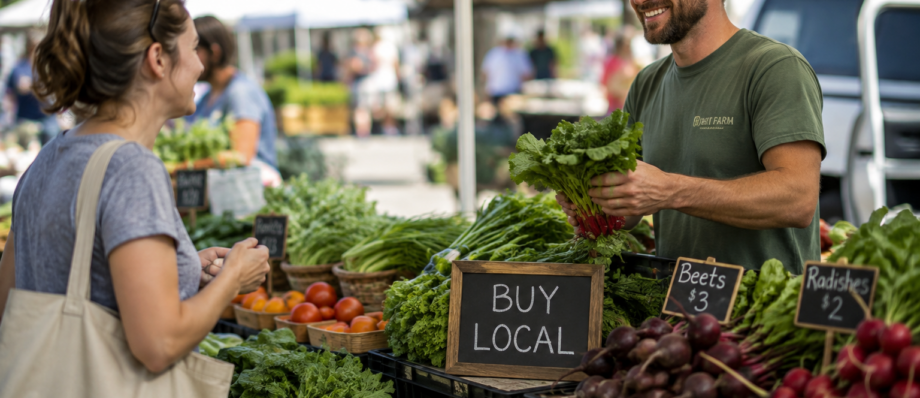
At a farmers market, farm stand, CSA pickup, or local farm, you may be able to speak directly with the farmer or someone closely connected to the operation.
You can ask:
Where was this grown?
When was it harvested?
Does your farm grow this product?
What growing practices do you use?
How should I store it?
Do you offer farm visits or a CSA?
Those conversations create a level of transparency that many consumers increasingly value.
There is also something powerful about knowing the farm that produced your tomatoes, greens, eggs, apples, beef, honey, or other foods.
Buying Local Doesn’t Mean Ignoring Food Safety
Supporting local farmers should never mean assuming local food cannot become contaminated.
It can.
Fresh produce should still be properly washed when appropriate. Meat and poultry should be stored and cooked safely. Refrigerated foods need proper temperature control. Consumers should continue paying attention to official food recalls and public health alerts.
Local food and food safety should work together.
The goal isn’t to replace good food safety practices with trust. The goal is to combine responsible food handling with greater awareness about where your food comes from.
Local Food Can Strengthen Local Communities
There is another reason people are choosing to shop local farms.
When consumers purchase directly from farmers, more of those food dollars can remain within local and regional economies. Farmers markets and farm stands can also introduce families to seasonal foods they might otherwise overlook.
Buying locally can mean discovering a nearby orchard, trying vegetables you’ve never cooked before, joining a community supported agriculture (CSA) program, visiting a pumpkin farm in the fall, or developing a relationship with a farmer who lives only a few miles away.
It transforms food from something we simply grab from a shelf into something connected to people, land, seasons, and communities.
Know Your Farmer. Know Your Food.
You don’t have to stop shopping at grocery stores to become more connected to your food.
Start small.
Visit a farmers market once a month. Find a farm stand near you. Purchase a few seasonal vegetables directly from a grower. Ask whether a nearby farm offers eggs, meat, produce, dairy products, honey, or CSA memberships.
Most importantly, start asking questions.
The recent conversations surrounding food recalls and foodborne illness outbreaks are reminders that understanding our food system matters.
Knowing your farmer doesn’t guarantee that a food safety problem will never happen. But knowing more about where your food comes from can help you become a more informed consumer.
And informed consumers can make better choices for themselves, their families, and their communities.
Farm Finder Network helps connect consumers with local farms, farmers markets, farm stands, growers, and agricultural businesses across the country. Explore the directory and discover local food near you.