
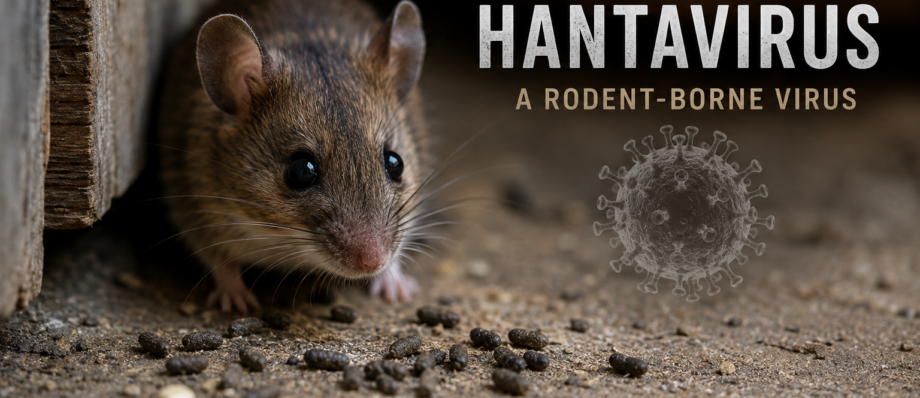
Hantavirus and Rural Health Risks
Hantavirus and the Hidden Risks Facing Rural America
For many Americans, farming and rural life represent freedom, fresh air, self sufficiency, and a deeper connection to the land. Across the United States, homesteads, hobby farms, ranches, and agricultural communities continue to grow as more people seek healthier lifestyles and sustainable living. But with that connection to nature also comes responsibility and awareness of environmental health risks that many people overlook.
One of those risks is hantavirus.
In recent weeks, renewed public concern about hantavirus has spread online following reports and discussions connected to cruise ship illnesses, rodent exposure concerns, and growing conversations across social media. Some online discussions have included exaggerated claims and conspiracy theories, while others have raised valid concerns about how the virus spreads and how dangerous it can become under certain conditions.
For agricultural communities, farmers, homesteaders, rural property owners, and even travelers visiting outdoor destinations, hantavirus is not just another headline. It is a real public health issue connected to wildlife, environmental conditions, storage practices, and rural infrastructure.
This is why the conversation belongs within the mission of Farm Finder Network.
Agriculture is not only about crops, livestock, and land ownership. It is also about environmental awareness, rural safety, food systems, public health, sustainability, and protecting the people who work closest to the land every day.
What Is Hantavirus?
Hantavirus Pulmonary Syndrome is a rare but potentially serious disease caused by hantaviruses that are primarily spread by rodents.
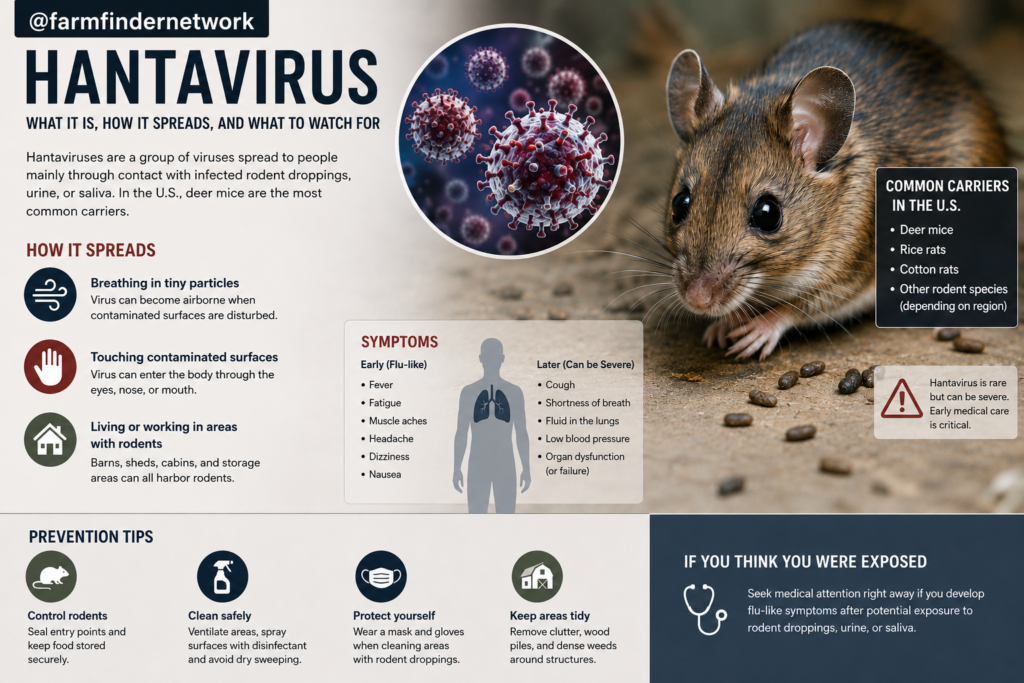
In the United States, the virus is most commonly linked to deer mice, but it can also be associated with other rodent species depending on the region. Humans may become infected after breathing in tiny airborne particles contaminated with rodent urine, droppings, or saliva.
Unlike common seasonal illnesses, hantavirus infections can become severe very quickly.
The disease may initially appear similar to the flu, but in some cases it can rapidly affect the lungs and respiratory system.
Early symptoms may include:
- Fever
- Fatigue
- Muscle aches
- Headaches
- Chills
- Nausea
- Dizziness
More severe symptoms may include:
- Difficulty breathing
- Persistent coughing
- Chest tightness
- Fluid buildup in the lungs
- Respiratory distress
Because the symptoms often begin like ordinary viral illnesses, some people may not realize how serious the infection is until breathing complications begin.
Why This Matters to Farmers and Rural Communities
Many people associate hantavirus with remote cabins or wilderness travel, but the risk can also exist on farms, ranches, homesteads, barns, feed storage facilities, and older rural properties.
Rodents naturally seek shelter near:
- Grain storage
- Animal feed
- Hay bales
- Wood piles
- Sheds
- Barn lofts
- Tractors and unused equipment
- RVs and campers
- Seasonal cabins
This creates a direct connection between hantavirus awareness and agricultural living.
Farm workers, homesteaders, property managers, and rural business owners often clean enclosed spaces that may contain rodent droppings without realizing the potential danger. Activities like sweeping barns, opening old sheds, or cleaning storage rooms can disturb contaminated dust particles and increase exposure risk.
As more Americans move toward rural living and homesteading lifestyles, education surrounding rural environmental health becomes increasingly important.
The Economic Impact of Hantavirus Concerns
Although hantavirus cases remain relatively rare in the United States, the economic impact of outbreaks and public fear can still affect multiple industries.
Agriculture and Food Systems
If rodent populations increase due to weather changes, abandoned infrastructure, poor storage conditions, or climate shifts, farms may face:
- Crop contamination risks
- Feed loss
- Storage damage
- Increased sanitation expenses
- Higher pest control costs
For smaller farms already operating on tight margins, these added expenses can become difficult to manage.
Tourism and Rural Travel
Recent conversations surrounding illness outbreaks on cruise ships and travel destinations have also increased public anxiety around sanitation and disease prevention.
This affects:
- Agritourism businesses
- Farm stays
- Rural vacation rentals
- Campgrounds
- Outdoor festivals
- Farmers markets
Consumers today are paying closer attention to cleanliness, environmental safety, and food handling practices than ever before.
Public Health Infrastructure
Rural hospitals and healthcare systems already face staffing shortages in many parts of America. Severe infectious diseases, even rare ones, place additional pressure on emergency care systems, testing resources, and public education campaigns.
Communities with limited access to healthcare may face longer diagnosis times and reduced awareness.
Separating Facts From Online Fear
The internet has amplified discussions surrounding hantavirus, but not every viral claim online is accurate.
Here are a few important facts:
Facts
- Hantavirus is real and medically documented.
- It is primarily linked to rodent exposure.
- It is not considered a common widespread airborne pandemic disease like seasonal influenza.
- Most cases occur through environmental exposure to contaminated rodent waste.
- Early medical attention matters significantly.
Important Clarifications
- Hantavirus is not spread through ordinary casual interaction with most infected people.
- Most Americans are not at high daily risk.
- Basic sanitation and rodent prevention dramatically reduce exposure risks.
Fear based misinformation often spreads faster than science. Rural communities benefit most from practical awareness, prevention, and responsible education rather than panic.
How Farmers and Homesteaders Can Reduce Risk
Preventing rodent infestations and handling cleanup safely are among the best protective measures.
Prevention Tips
- Seal holes and openings in barns, sheds, and homes
- Store feed in secure rodent resistant containers
- Remove clutter where rodents may nest
- Keep grass and weeds trimmed around structures
- Use proper traps and pest management systems
- Ventilate enclosed spaces before cleaning
Safe Cleanup Practices
Avoid dry sweeping rodent droppings.
Instead:
- Wear gloves and a mask
- Spray contaminated areas with disinfectant
- Allow disinfectant to soak before wiping
- Use paper towels instead of sweeping
- Wash hands thoroughly afterward
People cleaning cabins, barns, storage buildings, RVs, and seasonal structures should be especially cautious after long vacancy periods.
Why This Topic Belongs on Farm Finder Network
Farm Finder Network is more than a directory for farms and agricultural businesses. It represents a growing movement surrounding rural living, sustainability, homesteading, food systems, environmental education, and the future of agriculture.
Public health and environmental safety are deeply connected to:
- Farming
- Food production
- Land management
- Rural infrastructure
- Sustainable living
- Agricultural economics
Conversations like hantavirus awareness help educate communities while positioning Farm Finder Network as a trusted educational platform that cares about both the beauty and realities of rural life.
This type of content also helps broaden your SEO reach into:
- Rural health
- Agricultural safety
- Homestead education
- Environmental awareness
- Farm sanitation
- Sustainable living discussions
That creates opportunities for long term search traffic while staying aligned with your brand mission.
Resources and Safety Information
National Health Resources
- Centers for Disease Control and Prevention (CDC) Hantavirus Information
- National Institutes of Health (NIH)
- Occupational Safety and Health Administration (OSHA) Rodent Cleanup Guidance
State and Local Assistance
Contact:
- Your local county health department
- Your state department of health
- Agricultural extension offices through local universities
- Rural environmental health agencies
If You Believe You Were Exposed
Seek medical attention immediately if you experience:
- Fever with breathing difficulty
- Flu like symptoms after rodent exposure
- Severe respiratory symptoms after cleaning contaminated areas
Early treatment and medical evaluation are extremely important.
Join the Farm Finder Network Community
As agriculture and rural living continue evolving, awareness and education matter more than ever.
Farm Finder Network is building a growing community focused on farms, homesteading, sustainability, environmental awareness, rural business, and the future of agriculture across America.
Join the network to discover farms, connect with agricultural communities, explore educational resources, and stay informed on the issues shaping rural life today.